Our Blog

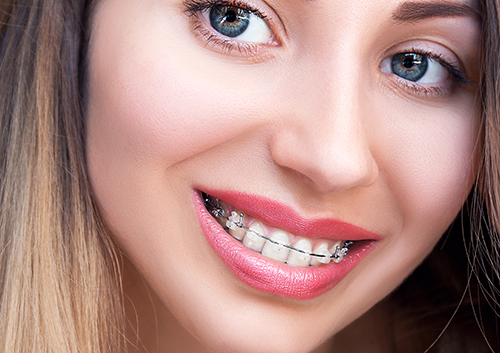
Positive Aging with Orthodontics

July 2nd, 2019

Crooked or crowded teeth aren’t always just a cosmetic issue; they also are more difficult to clean, which can lead to tooth decay and gum disease. Likewise, if your teeth don’t align properly when you bite (known as malocclusion), this can cause chewing, swallowing, and speaking problems.

You can put these risks to rest and look amazing, however, with well-thought-out orthodontic treatment from Dr. Trevor Bonilla. More and more adults are opting for orthodontic treatment and changing their lives in the process.

Childhood is of course the ideal time to get treatment, since the mouth and jaws are still growing, but many adults still can get beautiful and lasting results which can be achieved discreetly and effectively with modern orthodontic appliances and technologies.

Traditional braces used to be the only thing going, and many adults understandably don’t like the way they look. There are so many other options for braces these days that it’s possible for almost any patient to be treated effectively and efficiently — usually in one to two years.

Here are some of the technologies being implemented in our modern Coppell, TX orthodontic office:

  • Clear aligners: Practically invisible clear plastic aligners are great for less severe cases.
  • Lingual braces: These are placed on the back of your teeth instead of the front, and can handle anything that traditional braces can.
  • Ceramic braces: Translucent ceramic brackets make for effective and more discreet treatment.
  • Self-ligating braces: These require less manipulation by the orthodontist, which means fewer appointments and quicker results.

It should also be noted that the goal of orthodontic treatment (especially in adults) isn’t always limited to straightening teeth and/or correcting a bite. Teeth provide support for the lips and cheeks and help define your face.

The relationship between the jaws, teeth, face, soft tissues, and underlying skeleton of the face are important, and an orthodontist takes this into account when designing a smile.

In short, getting orthodontic treatment won’t just give you a good-looking and healthy smile; it can help define and enhance the entire appearance of your face. Knowing just how crucial your teeth are in determining how you look and live will help you age positively and confidently.
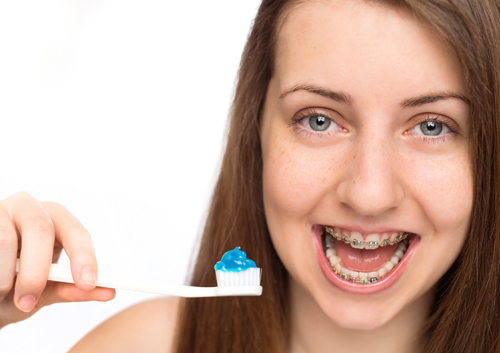

Brushing with Braces: How to Keep a Clean Mouth

June 25th, 2019

A clean mouth is a happy mouth. And when Dr. Trevor Bonilla and our staff see you have a clean mouth, we are happy too. Of course, all of this should make you happy because you’re the one preventing sneaky little food bits from getting trapped under the wires of your braces.

Still, you need to be thorough with your brushing. When you have braces, you’re playing a game of hide-and-go-seek with everything you eat. Here are five tips to keep your mouth (and us) happy.

  1. How is brushing with braces like geometry? It’s all about the angles. Brush the tops of your teeth and braces with your brush angled down. Brush the bottom of your teeth with the brush angled up. Pointy brushes, aka interproximal brushes, are good for reaching the tiny spots around braces.
  2. Brush after every meal. If those sneaky little food bits hide in your mouth for very long, they’ll turn into plaque. And plaque is a sign of a very unhappy mouth.
  3. Brush one tooth at a time for at least ten seconds, and pay close attention to the spots where your braces touch your teeth.
  4. Fluoride is your new BFF. Make sure your toothpaste and mouthwash contain this cavity-fighting ingredient.
  5. Braces are no excuse not to floss. In fact, saying you can’t floss because you have braces is like saying the dog ate your homework. Dr. Trevor Bonilla and our staff, like your geometry teacher, aren’t going to buy it. Be sure to floss after every meal.

Safety of Dental X-Ray Radiation

June 18th, 2019

We all want to live our healthiest lives. We know that part of keeping ourselves healthy is regular visits to our Coppell, TX office for checkups and necessary dental work. And that dental work might require an X-ray. Should the amount of radiation in an X-ray concern us?

First, it is helpful to know that the radiation you are exposed to from a dental X-ray is very small. A set of most bitewing X-rays, for example, produces an amount of exposure about equal to the amount of background radiation we get from our normal surroundings in a typical day. We also take care to minimize your exposure even further by using specially designed equipment and protective shielding, and taking only necessary X-rays. If your child is very young, if you are pregnant, or if you have other health concerns, talk to us about the advisability of X-rays and whether they are essential to treatment.

Second, much of our careful general examination will be done visually. Dr. Trevor Bonilla can check for cavities and other problems and assess tooth and gum health. But sometimes, there are conditions which can’t be detected without an X-ray.

  • Decay that isn’t visible in an oral exam—if a small cavity develops between teeth, or is hidden underneath a filling, an X-ray will catch it before more damage can take place.
  • Infection—An X-ray will reveal infections such as abscesses that can damage both bone and tooth, and gum disease that has harmed bone and connective tissue.
  • Orthodontic and periodontal issues—We might need an X-ray to determine the spacing and development of your child’s incoming teeth and maturing jaw structure, to properly create braces for adults or children, or to place an implant within the jawbone.
  • If you are a new patient, it is helpful to have complete X-rays taken as a baseline of your current dental health and previous dental work. This baseline allows us to track tooth and jaw development, if necessary, and to evaluate any future changes that might be a concern. (If you have had X-rays taken in another office, we can help you have them transferred so we have a background of your dental history.)

Even though the radiation from a dental X-ray is minimal, be assured that we will never request any unnecessary procedure. When we recommend an X-ray, we do so to make sure there is no decay or infection threatening the health of your gums and teeth, and that we have the essential knowledge we need to treat any dental, periodontal, or orthodontic condition. Because we all want to live our healthiest lives—and part of that healthy life is both active and proactive dental care.

Ceramic Braces

June 11th, 2019

Congratulations! You have made the decision to get orthodontic treatment at our Coppell, TX office. Now it’s time to choose among your various appliance options. Traditional metal brackets and wires, lingual braces, a series of aligners—they all have positives to recommend them. And for some people, ceramic braces are the clear favorite.

Ceramic braces work like regular metal braces. Brackets are bonded to the front of each tooth, and rubber bands surrounding the brackets hold the arch wire that gradually moves the teeth into alignment.

Ceramic braces, however, use brackets made of clear or tooth-colored ceramic or porcelain which blend beautifully with the color of your tooth. The elastic ligatures, or rubber bands, can be chosen to match the brackets or your enamel. There are self-ligating ceramic brackets which don’t use bands at all. Technology is even working on ways to make the arch wire less visible! The end result is braces that are almost undetectable.

If you want a less obvious appliance for professional or personal reasons, talk to us about ceramic braces. As always, there are other factors to consider before you decide, which we will be happy to discuss with you.

  • Ceramic brackets are very strong, but they are still more brittle than the metal model. If you play a contact sport, these might not be for you. (But whatever braces you choose, please wear a mouthguard when playing sports.)
  • Ceramic braces might not be ideal depending on the amount of alignment and bite correction that is needed. They might also take a bit more time to bring your teeth into alignment. We will be able to tell you if ceramic braces will work for you and if they might require a longer period to move your teeth to their perfect position.
  • Brackets can sometimes be somewhat larger (though this isn’t always the case), and, because they can be abrasive, are often recommended for upper teeth only. This way, the lower teeth will not impact, or be impacted by, contact with the upper teeth.
  • Oral hygiene can trickier with ceramic braces. Although today’s brackets aren’t as prone to staining, you still need to be careful to brush away the plaque that can accumulate around the brackets. And the bands are susceptible to staining by the usual suspects—coffee, tea, colas, blueberries, or any strongly colored food or beverage.
  • Costs will differ depending on the treatment method you choose. Talk to us about cost comparisons with other orthodontic treatments.

Ceramic braces, because they are so much less visible, are a popular orthodontic option, especially for older teenagers and adults. If you are interested, talk to Dr. Trevor Bonilla about this effective way to straighten your teeth—discreetly. Ceramic might be the clear solution for creating your lasting, beautiful smile.

Request an appointment