Our Blog

Does my child need two-phase treatment?

February 19th, 2019

You might be surprised to see one of your second grader’s friends with a dental appliance. Isn’t orthodontic work just for teenagers? And, if not, should your seven-year-old be sporting braces right now? The answer to both of those questions is “Not necessarily.” Two-phase treatment is a process designed to correct issues that arise during different times in your child’s life.

First Phase Treatment

We recommend that every child have an orthodontic evaluation around the age of seven to determine if there is a problem that would benefit from early treatment. First phase orthodontics is not the same as orthodontics for older patients. The focus here is on the developing bone and muscle structures which form your child’s bite and provide space for the permanent teeth when they arrive.

There are some clear-cut orthodontic goals that are much easier to attain when children’s bones are still growing.

  • Reducing Crowding

If your child’s mouth is small, the permanent teeth will have little room to fit in when they arrive. We may recommend gently enlarging the upper dental arch with the use of a palatal expander. This device will provide room for the adult teeth, and could potentially shorten second phase treatment time. Sometimes the extractions necessary to create more room for permanent teeth in later years can be avoided, as well as the possibility of an impacted tooth—one which doesn’t erupt because it is blocked by other teeth.

  • Dealing with Jaw and Bite Concerns

Bones and muscles do not always develop properly, leading to problems with jaw and facial structure. Your younger child still has growing bones, so this is a great time to gently re-form the jaw into a healthy shape. Problems caused by crossbites, underbites, open bites, and other malocclusions can be reduced with early treatment.  

  • Protecting Teeth

If your child has protruding front teeth, these teeth are more likely to be damaged in falls, at play, or while participating in sports. We can gently reposition them.

Second Phase Treatment

Second phase treatment is designed for your older child. After a resting period, when the permanent teeth finish erupting, we should see your child to evaluate any further orthodontic needs. This is the time to finish the process of straightening the teeth and making sure that each tooth fits together properly for a comfortable and healthy bite. This phase usually makes use of braces or aligners, and can take approximately 12-24 months.

Two-phase treatment is not necessary for every child. But there are some unique reasons that early orthodontics might be recommended for your child, even if it’s clear that more orthodontic work will be needed later. Make an appointment with Dr. Trevor Bonilla at our Coppell, TX office, and let’s evaluate your child’s orthodontic needs, whether now or in the future, for a lifetime of beautiful smiles.


The Origins of Valentine's Day

February 12th, 2019

When we think of Valentine’s Day, we think of cards, flowers, and chocolates. We think of girlfriends celebrating being single together and couples celebrating their relationship. We think of all things pink and red taking over every pharmacy and grocery store imaginable. But what Dr. Trevor Bonilla and our team would like to think of is when and how this joyous, love-filled day began.

Several martyrs’ stories are associated with the origins of Valentine’s Day. One of the most widely known suggests that Valentine was a Roman priest who went against the law at a time when marriage had been banned for young men. He continued to perform marriage ceremonies for young lovers in secret and when he was discovered, he was sentenced to death.

Another tale claims that Valentine was killed for helping Christians escape from Roman prisons. Yet another says that Valentine himself sent the first valentine when he fell in love with a girl and sent her a letter and signed it, “From your Valentine.”

Other claims suggest that it all began when Geoffrey Chaucer, an Englishman often referred to as the father of English literature, wrote a poem that was the first to connect St. Valentine to romance. From there, it evolved into a day when lovers would express their feelings for each other. Cue the flowers, sweets, and cards!

Regardless of where the holiday came from, these stories all have one thing in common: They celebrate the love we are capable of as human beings. And though that’s largely in a romantic spirit these days, it doesn’t have to be. You could celebrate love for a sister, a friend, a parent, even a pet.

We hope all our patients know how much we love them! Wishing you all a very happy Valentine’s Day from the team at Ideal Orthodontics!

Why should I visit the dentist during my treatment?

February 5th, 2019

So, you just got your braces on, and you're wondering why you should continue visiting your general dentist since you’re seeing Dr. Trevor Bonilla every other month. Patients always ask us if they should continue to see their dentist while in orthodontic treatment. In short, the answer is yes.

Today, we thought we would share a few reasons why it’s crucial to keep up with your regular visits with your dentist in addition to coming in for your regular adjustments at Ideal Orthodontics.

One of the best reasons to visit your dentist while you undergo orthodontic treatment is to remove plaque and tartar. Having braces provides additional nooks and crannies in which food particles and bacteria can hide. Eventually, plaque and tartar can form around your brackets, bands or other appliances which can lead to cavities. Having your teeth professionally cleaned can help ensure most, if not all, plaque and tartar is removed. Even if you are undergoing clear aligner treatment, dental checkups and cleanings are equally as important.

The next reason to visit a dentist is to help protect your teeth from decalcification, or the loss of calcium in your teeth. A potentially serious condition in which white spots on your tooth surfaces, decalcification is irreversible and if left untreated, can lead to cavities. Decalcification is preventable; patients who cut down on sugary sweets and acidic foods, practice good oral hygiene, and visit their dentist regularly can help prevent decalcification.

The final reason we recommend visiting your dentist while you have braces is this: cavities can prolong your treatment. If you are interested in completing your orthodontic treatment on time and without any delays, visiting your dentist every six months or as recommended can go a long way toward making that a realistic goal. Your dentist can provide fluoride treatments or other treatments that strengthen your teeth and protect them from cavities.

Making sure to visit your dentist will help ensure your teeth look their best once your braces come off. If you do not have a general dentist and would like a recommendation on finding one in the Coppell, TX area, please give us a call or let us know at your next adjustment appointment!

How Long Do I Need To Wear Retainers?

January 29th, 2019

Once you get your braces off, you want to make sure your smile remains straight! This is where retainers come in.

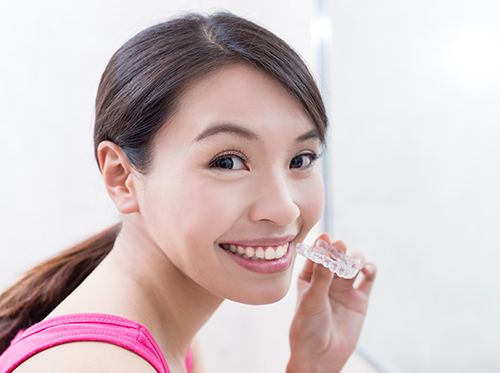
Once your braces come off, you’ll be fitted for a retainer provided by Dr. Trevor Bonilla to keep those teeth in place. A retainer is a custom-fit device that sits in the mouth and reinforces the new position of your teeth. Wearing it may be annoying at first, but it’s an essential part of the process of keeping your teeth in place over the long term.

For the first few months after your braces are gone, Dr. Trevor Bonilla will tell you to wear your custom retainers all the time, except when you’re eating, drinking, or brushing. You have the option of having a clear plastic retainer made if you’re concerned about your appearance.

Eventually, we will recommend that you only have to wear the retainer during each night for a full year. After that, you may take a couple nights off from wearing them each week. In order to preserve the position of your teeth for as long as possible, we don’t recommend that you ever fully stop wearing your retainers.

If you’re concerned about forgetting to wear your retainer, and worried that your teeth may shift, a lingual retainer could be a good option for you. This gets placed on the back of your teeth and is not readily visible.

These retainers are permanent, but they could cause issues for you down the road if you don’t maintain good oral hygiene. Plaque and tartar can build up around these lingual bars, which is why we don’t usually recommend this as a primary choice.

Wearing your retainer is extremely vital after your braces come off. Without your retainer to keep them in place, the teeth you’ve taken so long to fix may begin to shift again. Getting braces is quite an investment, which is why you should keep wearing your retainer long after the braces have come off.

If you have questions or concerns regarding your retainers, contact our Coppell, TX office and we can address any problems you may have.

Request an appointment